
How to Make Your Home Feel Warmer and More Comfortable Without Turning Up the Heat
Why Does a House Feel Cold Even When the Heat Is On?
A house can feel cold even when the thermostat shows a comfortable temperature because we experience more than just the temperature of the air. Cold windows, drafts, chilly floors and uneven temperatures throughout the home can all affect comfort.
Before increasing the thermostat, spend a little time in the rooms your family uses most. Pay attention to where you actually feel cold. Is it near a window? By an exterior door? On a hard floor? Identifying those chilly areas can help you decide what needs attention.
Check Windows and Doors for Drafts
Windows and exterior doors are good places to start when a room feels unusually cold. Even small gaps around them can allow chilly outdoor air into your living space.
Check the weatherstripping around doors and look for noticeable gaps around window frames. Depending on where the draft is coming from, weatherstripping, appropriate caulk or a door sweep may help reduce unwanted airflow. The U.S. Department of Energy also recommends sealing cracks and openings near windows and using weatherstripping or other appropriate window treatments to help reduce drafts.
This is one of those small home projects that may not change the appearance of a room, but it can make the space feel more comfortable.
Use Curtains to Help Keep Rooms Comfortable
Curtains are not just decorative. How you use your window coverings during colder months can affect how comfortable the area around your windows feels.
On sunny days, open curtains and blinds on windows receiving direct sunlight. Allowing sunlight into the room can provide natural warmth while making the space feel brighter.
Once the sun goes down and outdoor temperatures fall, close the curtains. This creates another layer between the room and the colder window surface.
Heavier curtains can be particularly useful in rooms that tend to feel chilly at night. Just be careful not to let curtains cover heating vents or other heat sources.
Add Warmth Under Your Feet
Hardwood, laminate and tile floors can feel especially cold during fall and winter. Adding an area rug is one of the easiest ways to make these spaces feel more comfortable.
A rug provides a softer surface beneath your feet while adding texture and visual warmth to the room. You do not necessarily need a huge rug either. Placing one beneath a seating area, beside the bed or in another frequently used space can make a noticeable difference.
If you enjoy changing your home with the seasons, we also shared more easy ways to make your home feel cozy and comfortable this fall, including ideas for using rugs, textures, lighting and seasonal touches throughout your home.
Bring Out the Blankets, Throws and Pillows
Sometimes the simplest solutions are the ones we already have tucked away in a closet.
Bring out comfortable throws and place them where your family will actually use them. Keep one over the back of the sofa or folded in a nearby basket. In bedrooms, an extra blanket across the bottom of the bed is easy to grab when the temperature drops overnight.
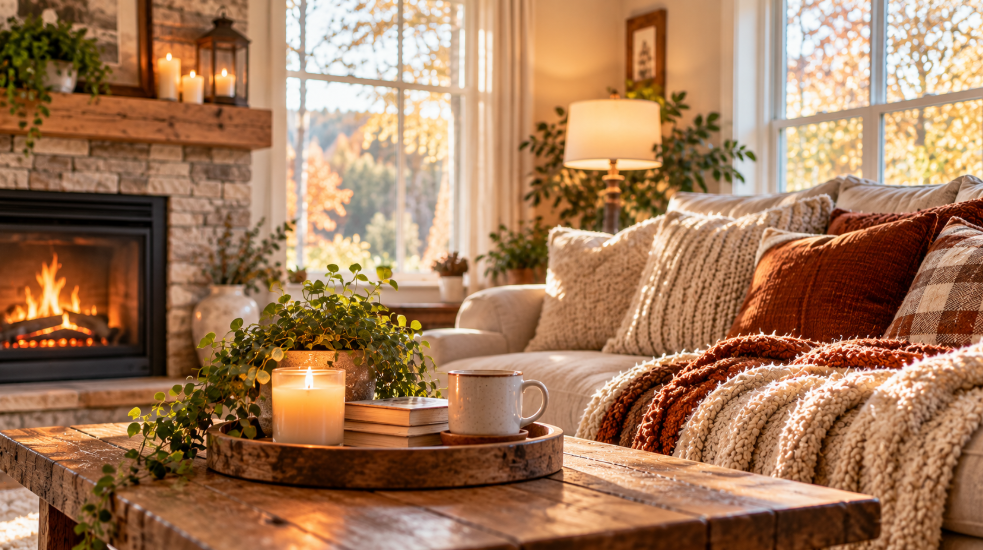
Soft textures such as fleece, flannel, wool and chunky knits can also make a room look and feel more inviting during the colder months.
Use Lighting to Create a Warmer Feeling
There is a difference between making a room physically warmer and making it feel warmer and more inviting.
A room lit only by a bright overhead fixture can sometimes feel stark on a dark fall or winter evening. Table lamps and floor lamps can create softer areas of light throughout the room and change the entire atmosphere.
Try turning off the main overhead light one evening and using the lamps you already own. You may be surprised by how much cozier the same room feels.
Move Furniture Away From the Coldest Areas
Furniture placement can have a bigger effect on comfort than we sometimes realize.
If your favorite chair is positioned directly beside a drafty window or exterior door, you may naturally feel colder while sitting there. When possible, moving frequently used seating slightly away from those cold spots can help.
At the same time, check that sofas, chairs, curtains and other furnishings are not blocking heating vents or radiators. Heated air needs room to circulate throughout the space.
Take Advantage of Winter Sunshine
Natural sunlight is worth taking advantage of during the colder months. When direct sunlight is coming through your windows, open the curtains and let it brighten the room.
Sunlight can provide some natural warmth while also making your home feel more cheerful during a season when many families spend more time indoors.
Once evening arrives, close the curtains again to create a barrier between the room and those colder window surfaces.
Create One Especially Cozy Space
You do not have to transform your entire home to make it feel more comfortable.
Choose one place where you or your family naturally relax. It might be one end of the sofa, a reading chair, the family room or a quiet corner of the bedroom.
Add a comfortable blanket, a pillow, nearby lighting and a small table for a book or warm drink. Having one intentionally cozy place to settle into can change how you experience your home during the colder months.
Do You Need to Buy New Things to Make Your Home Feel Warmer?
No. Many of the easiest ways to make a home feel warmer involve using things you already own.
You might move a rug from a room you rarely use, bring blankets out of storage, reposition a chair away from a cold window or move a lamp into a dark corner. Opening curtains when the sun is shining and closing them after sunset costs nothing.
Before buying more seasonal décor, walk through your home and see what you can rearrange or reuse.
What Is the Easiest Way to Make a Cold Room Feel Warmer?
Start by checking for obvious drafts around windows and exterior doors. Next, look at the surfaces and areas that feel particularly cold. Rugs, curtains and blankets can help make frequently used areas feel more comfortable, while direct sunlight can be useful during the daytime.
If one room continues to feel significantly colder than the rest of your home, however, there may be a larger issue involving insulation, windows or the heating system that deserves further attention.
For homeowners interested in taking things a little further, our guide to smart home upgrades worth making before winter arrives includes ideas such as smart thermostats, temperature sensors and other tools that can help you better understand and manage comfort throughout your home.
Small Changes Can Make a Big Difference
Making your home more comfortable during the colder months does not necessarily mean constantly turning up the thermostat or completely redecorating.
Often, it is a combination of little changes that makes the biggest difference. Stopping a draft, closing the curtains at night, putting a rug beneath your feet, keeping a blanket within reach and creating a comfortable place to relax can all contribute to a warmer feeling home.
Start with the rooms your family uses most. Pay attention to where the cold seems to be coming from and make small changes one at a time. You may find that your home starts feeling much more comfortable without touching the thermostat.
Frequently Asked Questions About Keeping Your Home Comfortable
Why does my house feel cold even when the thermostat says it is warm?
Drafts, cold windows, hard flooring, uneven heating and your location within a room can all affect how warm you feel even when the thermostat displays a comfortable temperature.
Can curtains help make a room feel warmer?
Yes. Closing curtains during colder evenings creates another layer between the room and cold window surfaces. During sunny days, opening the curtains allows natural sunlight into the room.
Do rugs help a room feel warmer?
Area rugs provide a softer surface between your feet and cold hard flooring. They can make frequently used areas feel more comfortable while adding texture and warmth to the room.
How can I make my bedroom feel warmer without increasing the heat?
Consider adding another blanket, placing a rug beside the bed, closing curtains at night and checking windows for drafts. If practical, moving the bed or seating away from especially cold exterior surfaces may also improve comfort.
Should furniture cover heating vents?
No. Sofas, chairs, rugs and curtains should not block heating vents or other heat sources. Keeping them clear allows heated air to circulate more effectively through the room.
What can I do first if one room is always colder than the others?
Start by checking windows and exterior doors for drafts and making sure heating vents are open and unobstructed. If the room remains noticeably colder than the rest of the house, it may be worth having the underlying cause investigated.




A working fireplace can do wonders for a space, but not all homes have one. I am not a fan of cold floors or rooms, but because of rising energy costs, we all have to make it work, so I bundle up when needed and flip the switch when I must. Great tips.
These are great ideas! It is better to cozy up rather than have to spend an outrageous amount on utilities.
Those tips are great. Curtains are indeed a gamechanger when you want to keep the warmth inside
Wow, these are so helpful. Now that winter is coming, we need to try these at home. It’s new to me, that we need to move the furniture away from the colder areas, this is nice idea. Thank you for these wonderful tips!
Yes, love this idea! Cozy blankets. I so love this time of year. Today is the first cool day, and it feels like crisp fall. I’m in heaven!
These are all such great points to be aware of. Last year, my new apartment was so cold, and I realized it was because the wooden window frames weren’t sealing properly. I had to insulate them better to keep the draft out, and then it was much warmer inside of the house!
These are great ideas! We live in a Chicago suburb, so we do all we can to make the house cozy, and I do all I can to avoid turning on the heat until I have to! LOL
We make use of curtains, socks, and area rugs quite a lot. Anything we can do to make the home cozier without making it pricier with these utility costs!
I need to keep these ideas in mind when it finally cools down in Texas. It’ll happen. Eventually. And I don’t like putting up the heat much because it’s pricey.