
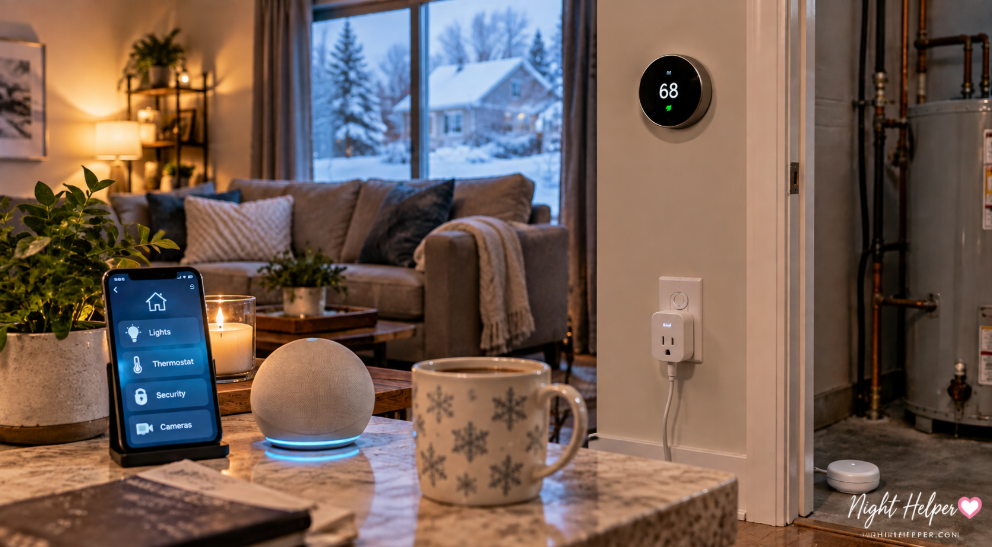
Smart Home Upgrades Worth Making Before Winter Arrives
When the temperatures start dropping and the days get shorter, most of us begin thinking about getting the house ready for winter. We check the furnace, pull out the warmer blankets and make sure everything outdoors is prepared for colder weather. But this is also a great time to take a look at the technology inside your home.
Smart home technology has come a long way. You no longer need an entire house filled with connected devices to enjoy the benefits. A few carefully chosen upgrades can make your home more comfortable, help you keep an eye on energy use and give you a little more control when winter weather arrives.
If you have been thinking about making your home a little smarter, here are some smart home upgrades worth considering before winter settles in.
Start With a Smart Thermostat
A smart thermostat is one of the first upgrades I would consider for winter because heating is such a big part of keeping a home comfortable during the colder months.
Instead of constantly walking over to the thermostat to make adjustments, many smart thermostats allow you to control the temperature from your phone. Depending on the model, you may also be able to create schedules, monitor energy use and automatically adjust temperatures when everyone leaves the house.
According to ENERGY STAR, certified smart thermostats are independently certified based on real-world data to deliver energy savings. Before buying one, make sure it is compatible with your home’s heating and cooling system.
I especially like the convenience during winter. If you are coming home after being away for several hours, being able to adjust the temperature before you walk through the door is a small luxury that can quickly become one of those features you wonder how you lived without.
Add Smart Temperature Sensors to Problem Areas
Most homes have at least one room that never seems to match the temperature of the rest of the house. It might be an upstairs bedroom that stays warmer, a family room that always feels chilly or a basement that gets especially cold once winter arrives.
Compatible smart temperature sensors can give you a better idea of what is actually happening throughout your home instead of relying on the temperature reading from one thermostat location.
Some smart thermostat systems can even use information from additional sensors to help manage hot and cold spots. ENERGY STAR notes that temperature and occupancy sensors are among the features available with some certified smart thermostats.
Keep an Eye on Indoor Air Quality
Winter usually means closed windows and more time spent indoors. That makes indoor air quality something worth paying attention to.
A smart indoor air quality monitor can help you keep track of conditions such as humidity and, depending on the device, particulate matter and other indoor air measurements. It doesn’t replace proper ventilation or regular HVAC maintenance, but it can give you useful information about what’s happening inside your home.
The U.S. Environmental Protection Agency recommends controlling indoor pollution sources, providing adequate ventilation and using appropriate filtration or air cleaning. The EPA also recommends controlling moisture and keeping indoor humidity below 60 percent, ideally between 30 and 50 percent.
Having that information available at a glance can be particularly useful during winter when the house stays closed up for longer periods.
Consider Smart Smoke and Carbon Monoxide Alarms
This is one area where smart technology isn’t simply about convenience.
Winter means furnaces, fireplaces and other heating equipment may be running more frequently. The EPA’s winter weather guidance recommends testing smoke and carbon monoxide alarms monthly and checking that carbon monoxide alarms are located outside sleeping areas and on every level of the home.
Connected alarms can offer additional features depending on the model, including phone notifications and interconnected alerts. The important thing is choosing properly certified equipment and installing it according to the manufacturer’s directions and applicable local requirements.
Use Smart Plugs for Everyday Convenience
Smart plugs are probably one of the easiest ways to start adding smart technology without making a major investment.
Plug in a lamp, holiday decoration or another compatible device and you can usually control it from an app or create a schedule. During the darker winter months, I like the idea of having lamps turn on automatically before the house gets completely dark.
They can also be useful when you’re traveling because you can create lighting schedules instead of leaving the same light on around the clock.
Just remember that smart plugs have electrical ratings and aren’t appropriate for every appliance. Always follow the manufacturer’s instructions and never connect equipment that exceeds the plug’s rated capacity.
Upgrade Your Smart Lighting
Winter brings shorter days, which means we’re reaching for the light switches much earlier.
Smart bulbs and smart switches can make lighting more convenient by allowing you to create schedules, control lights remotely and group several lights together. Some systems also allow you to adjust brightness and color temperature.
ENERGY STAR’s smart home guidance notes that smart lighting can be remotely controlled or scheduled. That can be helpful for both convenience and managing energy use.
You don’t have to replace every bulb in the house either. Starting with the living room, entryway or frequently used lamps can give you most of the convenience without turning the project into a major expense.
Add a Video Doorbell or Outdoor Camera
Cold weather doesn’t stop packages from arriving or visitors from coming to the door.
A video doorbell allows you to see who’s outside without opening the door, which becomes especially convenient when it’s freezing outside. Depending on the system, you may receive motion notifications, communicate with visitors and review recorded activity.
Outdoor smart cameras can provide additional coverage around entrances, garages and other areas of your property.
If you’re buying outdoor equipment specifically for winter, check its operating temperature range. Not every camera or doorbell is designed for extremely cold temperatures.
Think About Smart Water Leak Sensors
This is one of those small smart home devices that people sometimes overlook until they actually need one.
Freezing temperatures can increase the risk of plumbing problems. The EPA recommends preparing water lines and plumbing for winter, including insulating water lines along exterior walls when possible and knowing how to shut off water valves if a pipe bursts.
A smart leak sensor placed near a water heater, washing machine, basement plumbing or another vulnerable location can provide an additional warning if it detects water.
Some systems can send an alert directly to your phone, which is particularly useful if a problem happens while you’re away from home.
Make Sure Your WiFi Can Handle Your Smart Home
There is one thing all these connected devices have in common: they need a reliable connection.
If your WiFi already struggles in certain areas of the house, adding several more connected devices may make those weak spots more noticeable.
Before buying a house full of smart products, check your WiFi coverage. A better router placement, WiFi extender or mesh system may help improve connectivity depending on your home’s size and layout.
This is especially important for outdoor cameras, video doorbells and smart devices located far away from your router.
Don’t Forget About Smart Home Security
Every connected device added to your home is another device that should be properly secured.
Use strong, unique passwords for your smart home accounts and enable two factor authentication whenever the manufacturer offers it. Keep device software and apps updated as well.
I also recommend taking a few minutes to review privacy settings when setting up a new smart device. You don’t necessarily need every optional feature or data sharing setting enabled just because it is available.
You Don’t Have to Upgrade Everything at Once
The nice thing about creating a smarter home is that you can build it gradually.
You might start with a thermostat this fall, add a few smart plugs later and eventually decide that a video doorbell or leak sensor makes sense for your household. There is no reason to purchase every smart home device available simply because it exists.
I think the best smart technology is the kind that quietly makes everyday life easier. If it helps keep your home comfortable, provides useful information, saves you a trip across the house or gives you a little extra peace of mind during winter, then it is doing its job.
With colder weather approaching, now is a good time to look around your home and decide where technology could actually make a difference. A few thoughtful upgrades can help create a home that feels warmer, more convenient and better prepared for the winter months ahead.


These are all brilliant tips as we approach fall, and carbon monoxide alarms are a must. Safety steps are crucial too because we are indoors or away for the season, and we all want to feel safe.
Great pre-winter checklist. Sending to
My hubby for ideas. Thank you !
These are some of the things that I need to do before winter, and a smart thermostat is really a must!
These are good things to consider upgrading, especially when we are usually stuck inside for most of the winter. I will have to think about getting some of these and making sure the others are in working order.
We are living in the era of smart things and have so many options open to us. I actually am showing this post to hubby to discuss a few of. your ideas, as they make sense to me.
I need to get more smart home upgrades. I do have a few. I LOVE my Ring camera. I can decide if I want to deal with solicitors or not. I want other cameras outside the house eventually. You never can be too careful these days.
I recently installed a door camera for my home. The world is just getting too crazy not to have another layer of security.
A smart thermostat is an absolute must! We installed one earlier this year, and we’ve already saved so much on our energy bills.
These are great tips for the winter! We do have a super negative winter here in Finland, even minus 30, and these would be smart and cool things to add up into our home. Thanks for the ideas!
I’ve got the Nest Thermostat at home and I love it! It makes controlling the temperature so easy, even when I’m not inside the house itself (by using the app).