
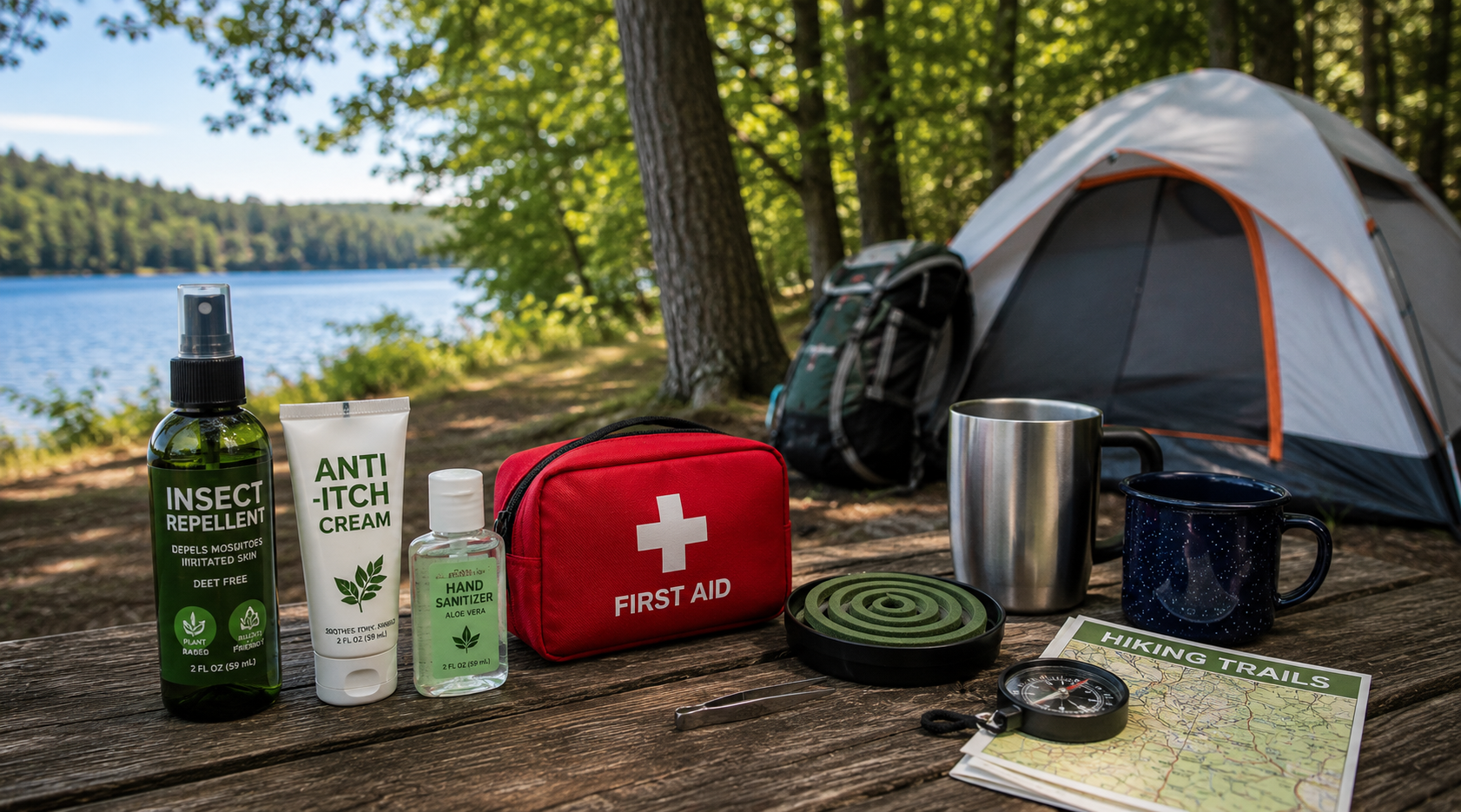
Bugs, Bites, and Itches: How to Stay Safe While Camping
Few things are more relaxing than escaping into nature. Whether you’re pitching a tent beside a quiet lake, exploring hiking trails, or spending the evening around a crackling campfire, camping is one of the best ways to disconnect from everyday life.
Unfortunately, the outdoors is home to more than beautiful scenery.
Mosquitoes, ticks, bees, poison ivy, and other common outdoor hazards can quickly turn an enjoyable camping trip into days of itching, scratching, and discomfort. Fortunately, a little preparation goes a long way. By knowing what to watch for and packing the right supplies, you can spend more time enjoying your adventure and less time dealing with unwanted surprises.
Know Where Bugs Like to Hide
Understanding where insects gather is one of the easiest ways to reduce your chances of getting bitten.
Mosquitoes
Mosquitoes love warm, damp environments and are especially active around sunrise and sunset.
You’ll often find them near:
Lakes
Ponds
Streams
Marshes
Tall grass
Shaded wooded areas
Before heading out, apply an EPA registered insect repellent. Products like Sawyer Picaridin Insect Repellent provide long lasting protection against mosquitoes and ticks while remaining gentle on most skin types. The CDC also recommends using EPA registered insect repellents that contain ingredients such as DEET or picaridin for effective protection.
Ticks
Ticks are small, but they can carry diseases such as Lyme disease, making prevention especially important.
They’re commonly found in:
Tall grass
Brush
Leaf litter
Woodland trails
Overgrown campsites
Whenever possible, stay on marked trails and avoid brushing against tall vegetation. After spending time outdoors, carefully check yourself, your children, and your pets for ticks. If you find one attached, remove it promptly using fine tipped tweezers. The CDC’s tick removal guide explains the safest way to remove a tick and what symptoms to watch for afterward.
Bees, Wasps, and Yellow Jackets
These insects usually aren’t aggressive unless they feel threatened, but they’re often attracted to food.
Be extra cautious around:
Picnic tables
Trash bins
Open soda cans
Sweet drinks
Flowering plants
Keep food covered whenever possible, clean up spills promptly, and avoid leaving sugary drinks unattended around your campsite.
Learn to Identify Poisonous Plants
Not every outdoor hazard flies or crawls. Poisonous plants can be just as miserable if you accidentally brush against them.
Poison Ivy
Most campers know the familiar saying:
“Leaves of three, let it be.”
Poison ivy commonly grows:
Along hiking trails
Around fallen trees
Near fences
Along campground edges
In wooded areas
Touching poison ivy can cause an itchy rash, redness, swelling, and painful blisters. If you think you’ve been exposed, wash the affected skin with soap and cool water as soon as possible to help remove the plant’s oil.
Poison Oak
Poison oak has leaves that resemble oak tree leaves and typically grows in dry wooded areas, fields, and sandy locations. Like poison ivy, it contains an oil that can trigger an irritating skin rash after contact.
Poison Sumac
Poison sumac is less common but often produces a more severe reaction.
It usually grows in:
Swamps
Marshes
Wetlands
Bogs
Because poison sumac prefers very wet environments, it’s less frequently encountered by campers, but it’s still worth learning to recognize before heading into unfamiliar areas.
Pack These Camping Essentials
A well-stocked camping kit can make all the difference if someone gets bitten or develops a rash.
Consider packing:
EPA registered insect repellent
Calamine lotion
Hydrocortisone cream
Oral antihistamines
Fine tipped tweezers
Adhesive bandages
Antiseptic wipes
Baking soda
Instant cold packs
A basic first aid kit
You can also find helpful camping safety advice and packing suggestions from REI’s camping checklist, which covers many outdoor essentials beyond first aid.
Simple Ways to Avoid Bug Bites
A few small habits can make a big difference during your trip.
Wear light colored clothing to spot ticks more easily.
Choose long sleeves and long pants when hiking.
Stay on established trails.
Keep your tent zipped closed.
Remove standing water around your campsite.
Wear closed toe shoes whenever possible.
Shake out shoes, sleeping bags, and clothing before use.
Check children and pets for ticks every evening.
Store food properly to avoid attracting insects.
What to Do After a Bite
Even with careful planning, bug bites can still happen.
For most mosquito bites, washing the area and applying an anti itch cream can help relieve discomfort. Bee stings should have the stinger removed carefully, followed by cleaning the area and applying a cold compress.
If you develop a widespread rash, experience difficulty breathing, notice signs of infection, or develop flu like symptoms after a tick bite, seek medical attention promptly.
Enjoy the Outdoors With Confidence
Camping should leave you with great memories, not itchy reminders of your trip. By learning where bugs hide, recognizing poisonous plants, carrying a few essential supplies, and taking simple preventive steps, you’ll be better prepared for whatever nature brings your way.
A little preparation before your trip can help ensure your next camping adventure is remembered for the campfire stories, beautiful scenery, and fresh air instead of bug bites and itchy skin.