

The Optimist in Theaters March 11 & 15 Only: A Powerful True Story of Resilience and Healing
There are some movies you watch and enjoy in the moment, and then there are the ones that sit with you long after you leave the theater. The Optimist is absolutely one of those films.
Only in theaters March 11 and 15, this powerful drama shares the true story of Holocaust survivor Herbert Heller and the unexpected friendship that changes two lives in ways neither of them could have imagined.
What struck me most about this story is the silence. At just fifteen years old, Herbert escaped the Auschwitz Birkenau death march. He survived something most of us cannot even begin to comprehend. And then he carried those memories quietly for more than sixty years. That kind of silence is heavy. You can feel it throughout the film.

Stephen Lang portrays Herbert in his later years with such depth and restraint. You see the weight of his past in his expressions, in the pauses between his words. Yet you also see compassion, strength, and a man who, despite everything, still chooses connection. It is a performance that feels honest and grounded.
When Herbert finally opens up, he forms an unexpected friendship with Abby, a teenager struggling with her own pain. Elsie Fisher brings so much vulnerability to this role. Abby feels real. She feels like someone many families know or love, a young person trying to find her place while quietly battling internal struggles.
Their bond becomes the heart of the film. It is not forced. It grows through conversation, honesty, and shared vulnerability. Watching two very different generations find common ground through truth is incredibly moving. Young Herbert, played by Luke David Blumm, adds another emotional layer in the flashbacks. His performance brings innocence and quiet strength to the earlier chapters of Herbert’s life.
While the film is rooted in Holocaust history, it is not only about tragedy. It is about courage. It is about what happens when someone finally feels safe enough to say, this is what happened to me. It is about how being truly heard can begin to heal wounds that have been buried for decades.
As someone who values stories that carry meaning beyond the screen, I found this one especially important. In a time when many young people feel unseen or unheard, this film gently reminds us that connection across generations can be life changing. Trauma may shape a life, but it does not have to define the ending.
The Optimist is emotional without being overwhelming. It is reflective without feeling heavy handed. Most of all, it is a reminder that even after unimaginable darkness, hope can still rise in the most unexpected ways.
If you appreciate films that make you think and feel, this is one worth seeing in theaters March 11 and 15.
Here’s a more detailed SYNOPSIS:
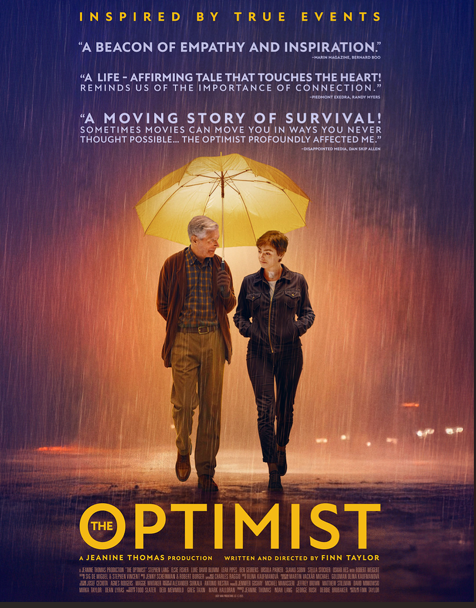
Based on a true story, THE OPTIMIST follows Holocaust survivor Herbert Heller and the unlikely friendship that transforms two lives. At 15, Herbert escaped the Auschwitz-Birkenau death march, carrying the weight of silence for six decades. When he finally breaks that silence, he forms a life-saving bond with Abby, a troubled teenager confronting her own pain. Together, they discover hope, healing, and the transformative power of being truly seen.Starring Stephen Lang (Avatar) as Herbert, Elsie Fisher (Eighth Grade) as Abby, and Luke David Blumm (Where The Crawdads Sing) as young Herbert, THE OPTIMIST is a profoundly moving film about resilience across generations and the courage it takes to tell the truth. Producer Jeanine Thomas added, “This film is the fulfillment of a promise to honor his truth.” Stephen Lang called the role “a profound privilege.”
THE OPTIMIST
Faith & Family Discussion Guide
The Optimist tells the true story of Herbert Heller, who kept hidden the story of his years in Auschwitz as a teenage boy from his family, until he meets Abbey, a young teenager whose own brush with pain and death inspires Herbert to open up. Through their honest and compassionate exchange, a healing and transformational friendship is born. This guide is designed to encourage families, small groups, and classrooms to reflect deeply on the emotional, spiritual, and relational themes at the heart of The Optimist.
Haunting Trauma
The Optimist is full of profound emotional and spiritual themes, but chief among them is trauma, both the experience of it, its hold on our lives, and how we navigate its lasting impact. Herbert and Abbey both suffer from PTSD as a result of drastically different traumas, the former from the horrors of the Holocaust and the latter from an emotionally abusive father, a neglectful mother, and the failed suicide pact with her best friend.
The film effectively shows how traumatic events and memories of them break into victims’ lives wholly unexpectedly and without warning, often triggered by even the most mundane and harmless events. The film also showcases effective practices for navigating those invasive moments, from breathing exercises to therapy to conversations with fellow sufferers. There’s also the trauma of survival, one that, perhaps, will never fully heal.
These questions will, to some extent, forever haunt the film’s central characters. Why did Herbert live while millions died? Why did Abby live while her friend died?
Questions for Consideration:
Do you or someone you know suffer from trauma? How do you process those ongoing struggles?
When have you seen someone endure great trauma? If they were able to navigate this trauma in a healthy way, how did this happen? In what ways has this inspired you?
What role does faith, prayer, or spiritual community play in healing from trauma?
Curious Connections
One of the strengths of The Optimist is the inter-generational friendship at the core of the story. We don’t often see such dynamics at work in film, and when we do, they’re often played for comedy. But The Optimist shows the importance and benefits of developing friendships and nurturing relationships that cross generational divides.
Herbert is able to provide Abbey with some much-needed perspective on her own experiences.
He never invalidates her suffering, but his honest recounting of the horrors he suffered puts Abbey’s suffering in a much broader and deeper context. And to her credit, Abbey is never dismissive of any part of Herbert’s story or judgmental of his decision to keep his story a secret for so long. She simply listens and asks questions, and her act of bearing witness to his suffering brings some measure of healing to Herbert’s life.
At the heart of both of their approaches to one another is a healthy dose of curiosity. Herbert tells Abbey, “I’d rather hear about [you.]” The world would be a much better place if we all lead with a spirit of curiosity about the other, rather than judgment or a desire to be “right.”
Questions for Consideration:
Consider your friend and family relationships. Do you interact with people much older or younger than you? What have you learned from them? How have these relationships impacted your life?
Have you seen inspirational inter-generational friendships in your community? In what ways do they encourage or inspire you to seek out similar connections?
What assumptions do you hold about older or younger people? How might curiosity challenge or change those assumptions?
Choosing Hope
The Optimist is about Herbert’s healing, but the optimist in The Optimist is really Herbert’s father, who, despite the unimaginable suffering he endures, never loses hope. In the face of great evil, Herbert’s father chooses hope, joy, and love. He sets an example for his sons and their fellow prisoners. It’s a lesson that Herbert never forgets.
Later in the film, Herbert tells Abbey, “I chose to believe my father.” Hope, like so many feelings (love, fear, joy, and despair, for example) can take us by surprise. Think about how we talk about some experiences: we are “knocked off our feet” or “stunned into silence.” But The Optimist shows us that there can be an element of choice in how we respond to all of our experiences. We can make a conscious decision to choose hope, joy, and love and to banish fear, hate, and anger. Of course, there are limits to the power, or effectiveness, of choice when it comes to those who suffer from PTSD or clinical depression, but, for most of us, in our day-today lives, the power of choice is available to us. We can choose to hope, to live in love, and to banish hate.
Questions for Consideration:
What gives you hope in difficult times?
Talk about a time when you experienced intense feelings of fear, anger, or hatred. Were you able to process and release those feelings? If so, how? If not, why not?
Who in your life models hope for you? What do they teach you about resilience?
THE OPTIMIST
Faith & Family Discussion Guide
Facilitator Notes & Scripture Reflections
This guide is designed for use in church, small and youth group, or classroom settings. As you lead others through these reflections, approach the conversation with empathy and curiosity. Encourage honest sharing, validate all emotions, and foster an atmosphere of safety, especially when discussing themes such as trauma, grief, and healing. Consider beginning each session with a brief moment of prayer. The Scripture reflections included below align with each theme and can be used to guide deeper spiritual connection and insight.
The Optimist tells the true story of Herbert Heller, who kept hidden the story of his years in Auschwitz as a teenage boy from his family, until he meets Abbey, a young teenager whose own brush with pain and death inspires Herbert to open up. Through their honest and compassionate exchange, a healing and transformational friendship is born. This guide is designed to encourage families, small groups, and classrooms to reflect deeply on the emotional, spiritual, and relational themes at the heart of The Optimist.




This is a rather timing release with all the stories about the holocaust, whether denial or truth. One person’s truth will always be inspirational to another.
This sounds like such an inspiring story. I always appreciate films that remind us how powerful optimism and resilience can be, especially during challenging times.
What a positive, powerful and beautifully shared story of an era that has left a huge dent on the human psyche. I’ve seen many Holocaust related movies and read many, many books on the subject. I will go see this movie when it open in theaters as we all need reminders of important periods in our global history and current world events have created an urgency reminding us of what matters most; unity, courage and global peace.
It sounds a great one with real feelings and experiences with hope!
How you review it, so heartfelt without feeling overly polished, I would love to see it.
Interesting that the film is only running March 11–15, that makes it feel like one of those limited screenings you have to plan for. I like how you pointed out the message about choosing optimism even when things feel uncertain.
It sounds like the storyline for this moving is both hard hitting and also rather thought provoking too which is quite often the case with true stories. I think many these days have some sort of trauma to deal with, not necessarily to this magnitude but then who can judge our personal traumas.
Great movie review! I usually watch films about the Holocaust, it’s good to keep in mind that all that horror actually happened, and not so long ago.
Hearing about that long silence finally breaking feels heavy but also quite beautiful. Finding a friend who truly listens must have changed everything for him. I might bring some tissues for those theater dates.
This film sounds like a powerful and deeply moving story, blending the real-life courage of Holocaust survivor Herbert Heller with the compassion and healing that can come from unexpected friendships across generations. I love that The Optimist highlights how vulnerability and connection can lead to understanding and hope, especially through the inspiring performances of Stephen Lang and Elsie Fisher. Thanks for the heads-up on its limited theatrical run. It’s definitely one I’d consider seeing on the big screen for its emotional impact and timeless message.
This sounds like a powerful one. I love movies that stick with you like that. I’ll have to check it out.
I really want to see this one. That period of history is both horrifying and intriguing to me. This one sounds great.
This looks like such a great, powerful film! I’ve not been out to the movies in so long, and this would be the perfect opportunity to do so.