
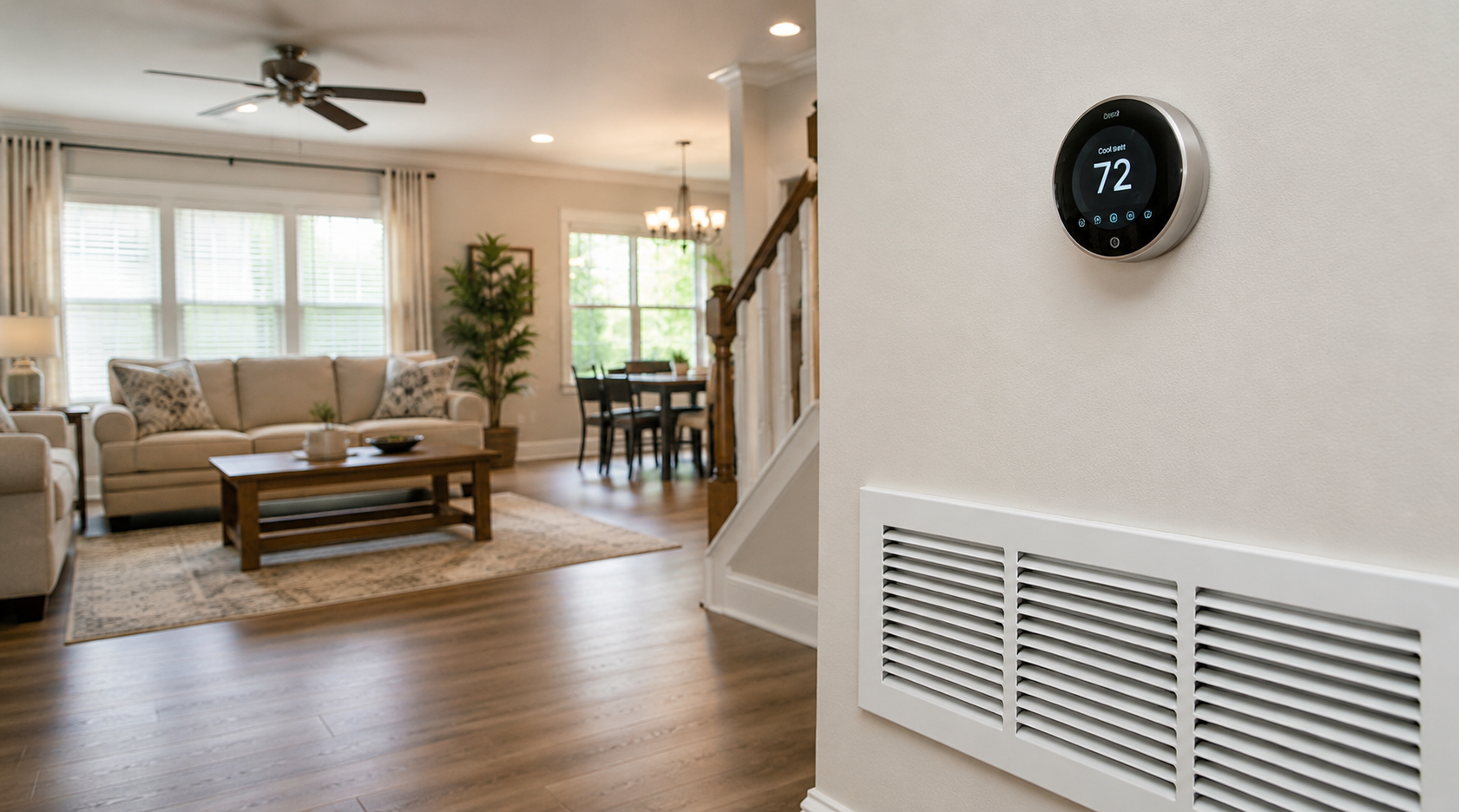
How to Fix Uneven Heating and Cooling Without Replacing Your HVAC
Uneven temperatures don’t always mean you need an HVAC replacement. In many homes, the real cause is poor airflow, duct problems, thermostat placement, insulation gaps, or other issues that can often be corrected without replacing the entire system. Problems with uneven heating and cooling in house often come down to how air is distributed or how individual rooms gain and lose heat.
Why Does My Home Have Uneven Heating Or Cooling?
Uneven temperatures usually happen when your HVAC system cannot deliver the right amount of conditioned air to every part of the house, or when different rooms are gaining or losing heat at different rates. One bedroom may receive plenty of airflow while an upstairs room, addition, or space at the end of a long duct run receives much less. This type of uneven temperature in house is often most noticeable between rooms on different floors or at opposite ends of the duct system.
The cause can come from several parts of the home: restricted airflow, duct leakage, incorrect damper settings, thermostat location, insulation gaps, air leaks, solar heat gain, or equipment that is struggling to maintain proper airflow. Multi-story homes are especially prone to temperature differences because warm air naturally rises and upper floors often absorb more heat through the roof and windows. These factors can contribute to both uneven heating and uneven cooling, depending on the season.
The timing matters too. A room that has always been uncomfortable suggests a design or building-envelope issue. A recent problem with uneven home temperatures may point more strongly to a change in airflow, duct condition, or HVAC performance.
Causes Of Uneven Heating And Cooling In House
The most common causes fall into three areas: airflow, the building envelope, and HVAC performance. When evaluating uneven heating in house or uneven cooling in house, these three areas provide a useful starting point.
Airflow problems include closed or obstructed registers, clogged filters, undersized or poorly designed ductwork, leaking ducts, crushed flexible ducts, restricted return air, and dampers that send too much air to some rooms and too little to others. The building itself also plays a major role. Missing attic insulation, drafty windows, air leaks, large expanses of glass, vaulted ceilings, and rooms located over garages or next to unconditioned spaces can create noticeably different heating and cooling loads. Some airflow and duct problems can also affect indoor air quality.
HVAC-related issues can include a dirty evaporator coil, weak blower performance, incorrect fan settings, refrigerant problems, an improperly sized system, or equipment that has lost capacity with age. Any of these conditions can make uneven heating or uneven cooling more pronounced.
The location of the problem often provides a clue. One uncomfortable room suggests a local airflow or insulation issue. Several rooms on the same side of the house may be affected by sun exposure or prevailing winds. An entire second floor that stays warm can indicate attic heat gain, insufficient upstairs airflow, or a system controlled by a thermostat on the cooler first floor. This pattern is common when uneven cooling in house is concentrated upstairs.
The season can provide another clue. Summer-only problems often involve solar gain, attic conditions, humidity, or cooling airflow. Winter-only problems can involve drafts, cold exterior surfaces, stack effect, or heat loss through poorly insulated ceilings and walls.
Uneven temperatures are therefore most useful when evaluated as a pattern rather than as a single thermostat reading. Tracking where and when uneven home temperatures occur can make the underlying cause easier to identify.
How Vents, Filters, And Ducts Cause Uneven Temperature In House
Your HVAC system relies on a specific amount of air moving through both the supply and return sides of the duct system. Anything that restricts or redirects that airflow can change how much heating or cooling reaches individual rooms. As a result, an uneven temperature in house may begin with something as simple as an airflow restriction.
Furniture, rugs, curtains, or closed registers can limit supply airflow. A heavily loaded filter can reduce airflow through the entire system, making distant rooms especially difficult to condition. A clean filter can also create problems if it is more restrictive than the HVAC system was designed to handle.
Return vents matter as well; a room with poor return-air circulation can become pressurized when the door is closed, reducing the amount of conditioned air that enters it. In some homes, dedicated returns, transfer grilles, or jump ducts are used to provide a better return path.
Duct problems can produce even larger temperature differences. Leaking supply ducts may lose heated or cooled air in an attic, crawl space, or wall cavity before it reaches the room. Disconnected or crushed ducts can sharply reduce airflow to a particular area. Poorly positioned balancing dampers may send excessive air through short duct runs while starving longer branches. Return-duct leakage can pull hot attic air, cold crawl-space air, dust, or moisture into the system.
Checking registers and replacing a dirty filter are reasonable homeowner steps. Diagnosing concealed duct leakage, airflow restrictions, and pressure problems usually requires professional airflow testing.
How Thermostats And Insulation Create Uneven Home Temperatures
The thermostat controls the HVAC system based primarily on conditions where the thermostat is located, so its location can strongly influence comfort elsewhere. This is one reason uneven home temperatures can persist even when the thermostat itself appears to be working correctly.
A thermostat near a sunny window, exterior door, kitchen, supply register, electronics, or another unusual heat source may sense a temperature that does not represent the rest of the house. A thermostat in a naturally comfortable central hallway may also satisfy quickly while bedrooms upstairs continue getting warmer.
Insulation and air sealing affect each room independently. A room beneath a poorly insulated attic, above an unconditioned garage, beside a drafty exterior wall, or surrounded by large windows may gain or lose heat much faster than rooms near the center of the home. Missing attic insulation over one bedroom, poorly insulated knee walls, or air leakage around an attic hatch can create similar differences. During cold weather, these conditions can contribute to uneven heating in house even when the furnace is operating normally.
Windows and exterior surfaces also influence comfort. A room with large west-facing windows can feel substantially warmer in the afternoon because of solar radiation, even when its measured air temperature is only slightly higher than nearby rooms. In summer, that added heat gain may show up as uneven cooling in house on the sunny side of the home.
The HVAC system can be operating correctly and still struggle to compensate for those differences. An HVAC contractor can evaluate thermostat location and airflow, while an energy audit or thermal inspection can help identify insulation gaps and air leakage. Looking at both sides of the problem often produces better results than adjusting the HVAC system alone.
How To Fix Uneven Heating Or Cooling In House
Many uneven-temperature problems can be corrected while keeping the existing furnace, heat pump, or air conditioner. The right correction depends on whether uneven heating, uneven cooling, or both are being caused by airflow, controls, or the building envelope.
Start with the parts of the airflow path that are easiest to inspect: install a clean filter of the correct type, make sure supply and return registers are unobstructed, and confirm that furniture or rugs are not interfering with circulation. Keep interior doors positioned in a way that allows adequate return airflow, especially in rooms without dedicated return vents.
From there, an HVAC technician can measure airflow and static pressure rather than relying on register temperature alone. Depending on the findings, improvements may include sealing duct leaks, repairing damaged ductwork, adjusting balancing dampers, correcting blower settings, improving return-air pathways, relocating the thermostat, or adding compatible room sensors.
Home improvements can help as well. Air sealing, attic insulation, window shading, weatherstripping, and correcting insulation gaps can substantially reduce the heating or cooling demand of problem rooms. These measures are especially useful when an uneven temperature in house is being driven by heat gain or heat loss rather than equipment capacity.
The most effective repair depends on why the room is uncomfortable. Measuring airflow, temperature differences, duct pressure, and the home’s heat-loss or heat-gain characteristics gives you a much clearer path than simply increasing thermostat settings or closing vents elsewhere.
Fixing Uneven Heating In House With Balancing And Duct Sealing
They can, particularly when the HVAC system has enough capacity and the main issue is how conditioned air is distributed. In those cases, balancing and duct repairs can address uneven heating in house without changing the main equipment.
Air balancing involves measuring airflow at individual registers and adjusting the system so rooms receive amounts appropriate for their heating and cooling needs. Technicians may adjust manual dampers inside branch ducts to redirect some airflow from rooms receiving more than they need toward rooms receiving too little.
Damper adjustments should account for total system airflow. Excessively restricting multiple branches can increase static pressure, produce duct noise, increase leakage, and interfere with equipment performance. Adjustments made at branch dampers are generally more useful than simply closing several room registers.
Duct sealing can help when conditioned air is escaping through joints, seams, or connections before reaching the intended rooms. Repairs to crushed, kinked, disconnected, or poorly supported ducts may also restore airflow that balancing alone cannot correct. Duct sealing can make a significant difference when ducts pass through attics, crawl spaces, garages, or other unconditioned areas. Correcting these losses can also reduce uneven heating and cooling in house when multiple rooms are affected.
Good balancing is measurement-based. A technician may check register airflow, return-air performance, static pressure, blower operation, duct configuration, and temperature rise or drop across the equipment. That information shows whether the problem can be solved through adjustments or whether the duct system needs physical modifications.
Some homes also require different airflow priorities by season. A south- or west-facing room may need additional airflow during summer, while another room with greater exterior exposure may need more heat during winter. Seasonal balancing can account for those changing loads.
Zoning And Sensors For Uneven Heating And Cooling In House
Zoning and room sensors are especially useful when different parts of a house regularly need different amounts of heating or cooling. They can be particularly helpful when uneven heating and cooling in house follows a predictable floor-by-floor or room-by-room pattern.
A zoned HVAC system divides the home into independently controlled areas, typically using multiple thermostats or sensors and motorized duct dampers. It can be particularly helpful in two-story homes, finished basements, large additions, wings that receive different amounts of sunlight, or homes where certain areas are occupied only at specific times.
Room sensors are useful when the temperature near the main thermostat does not represent the rooms where comfort matters most. Depending on the thermostat and HVAC controls, sensors can allow the system to monitor temperatures beyond the hallway where the main thermostat is installed. For example, a compatible thermostat may use a bedroom sensor at night and the main thermostat during the day. Some systems can average readings from several sensors, reducing the influence of one unusually warm or cool thermostat location.
Zoning requires proper design. Closing off too much ductwork can create excessive static pressure and airflow problems unless the duct system and equipment controls are designed for it. A contractor should evaluate duct capacity, blower performance, equipment compatibility, and the home’s heating and cooling loads before adding zones.
Room sensors address where temperature is measured. Zoning changes where conditioned air is delivered. Homes sometimes benefit from one, the other, or a combination of both.
When Uneven Home Temperatures Signal A Bigger HVAC Problem
A recent change in comfort is one of the strongest reasons to inspect the HVAC equipment itself. Uneven temperatures become more concerning when they appear suddenly, continue getting worse, or occur along with other signs of declining HVAC performance.
A repair may be needed if airflow has weakened throughout the house, the system runs for unusually long periods, rooms no longer reach the thermostat setting, the indoor coil is freezing, the furnace cycles abnormally, or the system produces noticeably less heating or cooling than it once did. Blower problems, dirty coils, refrigerant issues, control problems, and failing components can all reduce the system’s ability to distribute conditioned air properly.
Replacement becomes worth evaluating when testing shows that the equipment cannot meet the home’s heating or cooling load, major components are failing, or an existing system was incorrectly sized from the beginning. Home renovations can also change the load significantly; finishing an attic, enclosing a porch, or adding living space may leave the original equipment and duct system unable to serve the expanded home properly.
Uneven temperatures alone do not establish that a new HVAC system is needed. Before deciding on replacement, ask for measurements that explain the temperature problem. A thorough evaluation may include equipment performance testing, static-pressure measurements, airflow readings, duct inspection, and a room-by-room heating and cooling load calculation.
Those results help determine whether the solution is a repair, airflow correction, insulation improvement, zoning upgrade, duct modification, or new HVAC equipment.


Love all the awesome tips! I’ve installed a new system and will use your tips to improve it!
I didn’t realize there were so many factors that could cause uneven heating at home. We actually have the same problem, and now I’m wondering if we might need better insulation in one of the rooms since it gets direct sunlight for most of the day. Thanks for sharing these tips!
It is interesting that your duct might be the issue! We do not have a HVAC, which is really a minus for our household.
This is very thorough, thank you so much. We do have an issue with the humidity in our house, I am not sure how this could be solved. I think we might need to check our ducts and filters.
We do not have this here, but can see how important it is to have it checked. We just had our boiler replaced so we can hopefully have cheaper bills come the winter
We need to have our HVAC setup checked out. Parts of our home have gotten uneven over the past couple of years, and there’s definitely something going on.