
Scalp Micropigmentation vs. Tattoos: 5 Key Differences You Should Know
Hair loss affects millions of men and women, leading many people to explore cosmetic procedures that can restore the appearance of a fuller head of hair. Two treatments that are often confused are traditional scalp tattoos and scalp micropigmentation (SMP). While both involve placing pigment into the skin, they are designed for very different purposes and produce noticeably different results.
If you’re considering a non-surgical option to improve the appearance of thinning hair, a receding hairline, or bald spots, it’s important to understand how these treatments differ. Below are five key differences between traditional tattoos and Scalp Micropigmentation (SMP) and why many people choose SMP for a more natural-looking result.
-
-
- Scalp Micropigmentation Uses Specialized Equipment
-
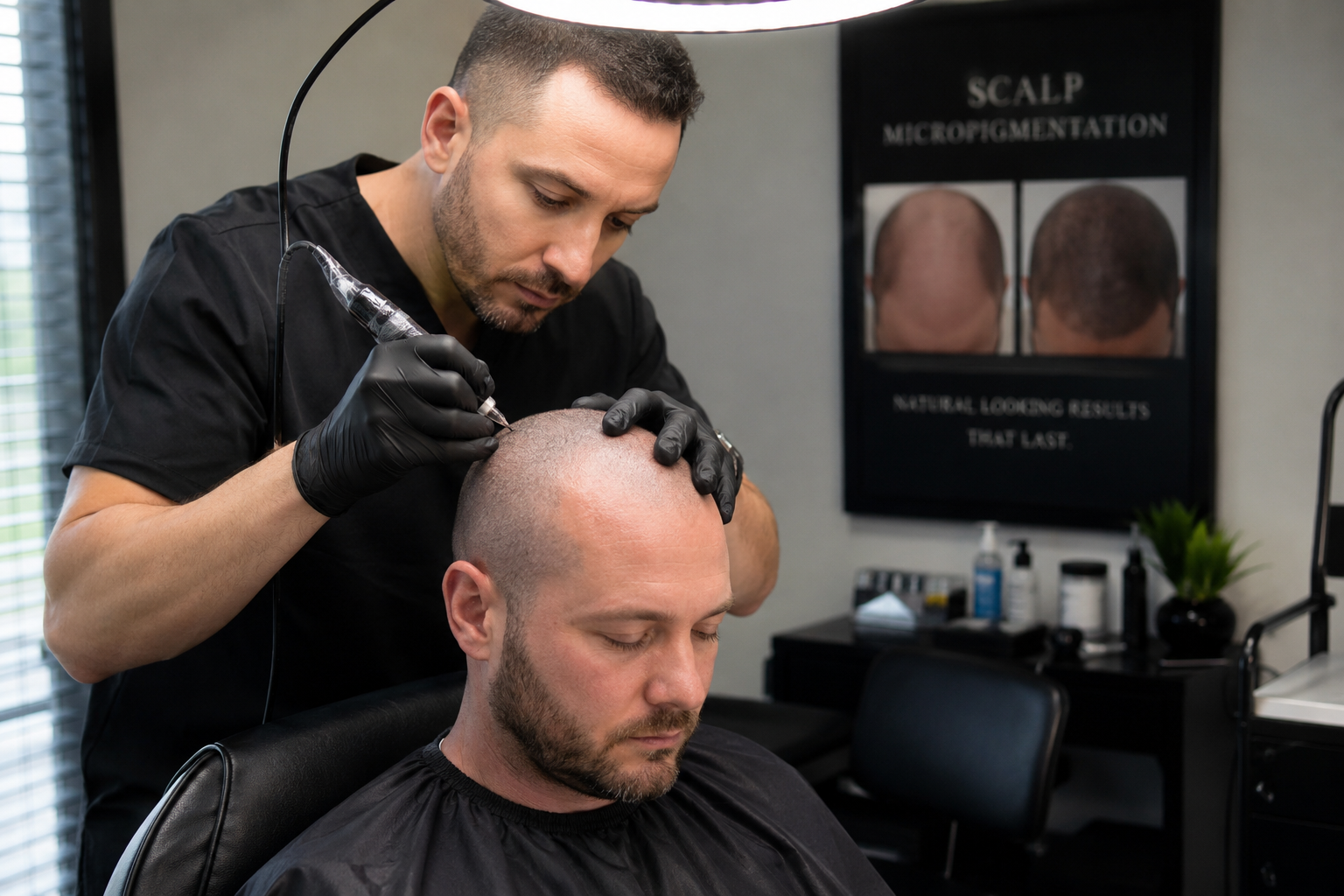
Although both scalp tattoos and scalp micropigmentation use needles to deposit pigment into the skin, the equipment is designed for very different purposes. Traditional tattoo machines are created to produce artwork with bold lines, shading, and permanent designs. Scalp Micropigmentation (SMP), however, uses specialized equipment with ultra-fine needles that create tiny impressions designed to replicate the appearance of natural hair follicles.
Because SMP practitioners can vary needle sizes, pigment depth, and placement, they are able to create a much more realistic illusion of closely shaved hair or increased hair density. The precision of these tools allows the treatment to blend naturally with existing hair, making thinning areas and receding hairlines far less noticeable.
-
-
- Scalp Micropigmentation Requires Specialized Training
-
Creating realistic-looking hair follicles requires far more than artistic ability. While professional tattoo artists receive extensive training in body art, Scalp Micropigmentation practitioners undergo specialized education focused on scalp anatomy, hairline design, pigment placement, and color matching.
Every treatment is carefully customized to complement the client’s existing hair color, skin tone, facial features, and desired appearance. Practitioners must understand how to create natural density without making the treatment appear artificial. This level of precision is one of the reasons why choosing an experienced SMP professional is so important.
-
-
- Pigments Are Formulated Differently
-
Another significant difference between traditional tattoos and Scalp Micropigmentation is the type of pigment that is used. Conventional tattoo inks are designed for body art and may gradually fade or shift in color over time. In some cases, older tattoos can develop unwanted blue, green, or reddish tones as they age.
Scalp Micropigmentation uses pigments specifically developed for cosmetic scalp procedures. These pigments are selected to closely match natural hair colors while maintaining a softer, more natural appearance as they gradually fade. This helps create results that continue to blend with your hair over time rather than developing noticeable color changes.
-
-
- Scalp Micropigmentation Usually Requires Multiple Sessions
-
Unlike many traditional tattoos that can often be completed during a single appointment, Scalp Micropigmentation is typically performed over two to five treatment sessions. This gradual approach allows practitioners to build density in layers while making adjustments as the scalp heals between visits.
Although multiple appointments require additional time, they often produce more realistic and customized results. Layering the pigment carefully creates depth, improves blending, and allows both the client and practitioner to evaluate progress before completing the final treatment.
-
-
- Safety and Professional Standards Matter
-
Whether you’re considering a tattoo or Scalp Micropigmentation, choosing a qualified professional should always be your top priority. Reputable SMP clinics follow strict sanitation protocols, use sterile single-use needles, and maintain high standards for cleanliness throughout every procedure.
Before scheduling a treatment, research the clinic, review before-and-after photos, read customer reviews, and ask about certifications and experience. A skilled practitioner can answer your questions, explain the process in detail, and help determine whether Scalp Micropigmentation is the right option for your hair restoration goals.
Who Is a Good Candidate for Scalp Micropigmentation?
Scalp Micropigmentation is a versatile cosmetic procedure that may benefit both men and women experiencing different types of hair loss. It is commonly chosen by individuals with thinning hair, receding hairlines, male or female pattern baldness, alopecia, or visible scalp scars from previous hair transplant procedures. Some people also choose SMP simply to create the appearance of a fuller hairstyle without undergoing surgery.
While SMP cannot restore hair growth, it can significantly improve the appearance of hair density and create the illusion of closely cropped hair. The best way to determine whether you’re a good candidate is to schedule a consultation with an experienced practitioner who can evaluate your individual needs and recommend the most appropriate treatment plan.
How Long Does Scalp Micropigmentation Last?
One of the advantages of Scalp Micropigmentation is its long-lasting results. Although individual experiences vary depending on skin type, sun exposure, and lifestyle, many people enjoy their results for several years before needing a touch-up appointment.
Following your provider’s aftercare instructions is essential for maintaining the appearance of the treatment. Protecting your scalp from excessive sun exposure, using recommended skincare products, and attending touch-up sessions when needed can help keep the pigmentation looking natural and consistent over time.
Choosing the Right Practitioner
The quality of your results depends heavily on the experience and skill of the practitioner performing the procedure. Before scheduling treatment, research clinics carefully, review before-and-after photos, read verified customer reviews, and ask questions about training, certifications, and the pigments used during the procedure.
Taking the time to choose an experienced Scalp Micropigmentation specialist can make a significant difference in achieving natural-looking results that complement your facial features, hair color, and overall appearance.